Expertise

Our Expertise

Five integrated areas of specialisation

Tarmeem Center delivers heritage conservation across five integrated areas of specialisation, combining traditional craft knowledge with advanced technical capability.

  • 01

    Architectural Conservation

    Preserving and restoring historical structures using traditional materials and compatible techniques.

  • 02

    Conservation of Artworks

    Preserving and restoring artistic and decorative works within their heritage contexts.

  • 03

    Traditional Crafts

    Applying and transmitting craft skills such as carpentry, masonry and blacksmithing.

  • 04

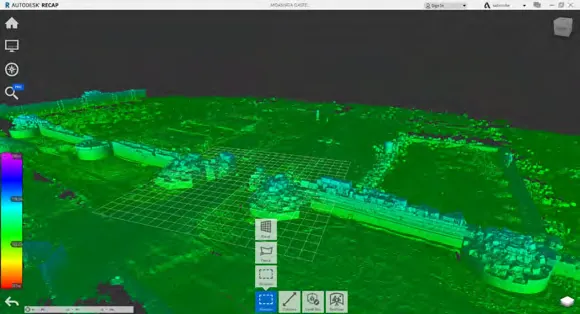
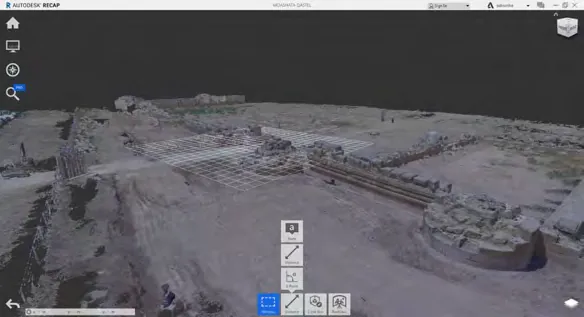
    Advanced Documentation

    3D laser scanning, drone survey and photogrammetry to document and analyse heritage sites.

  • 05

    Surveying Techniques

    Geophysical and archaeological methods, including resistivity survey, to study and protect sites.

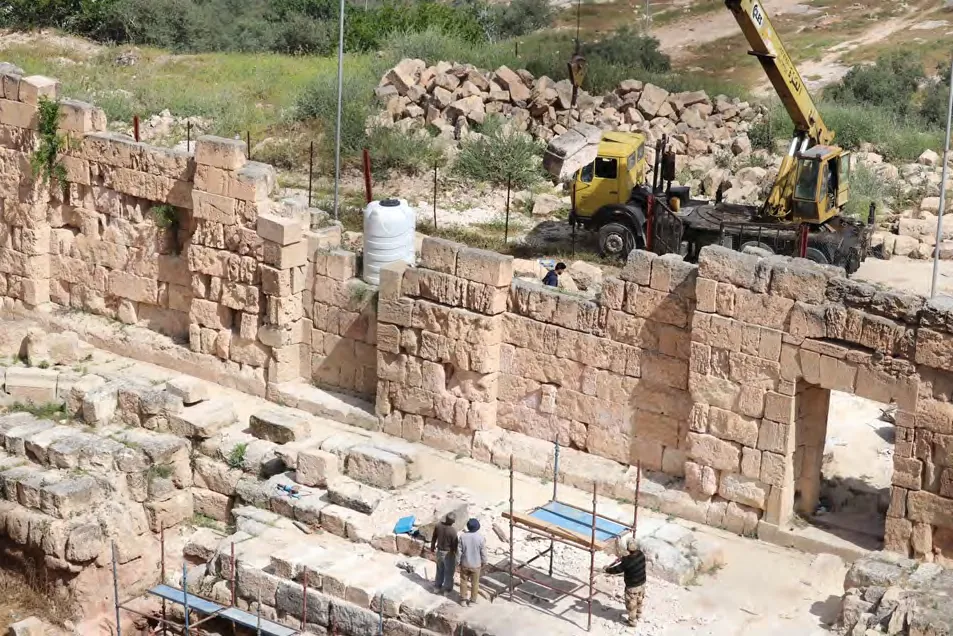
  • A crane and team working among ancient stone walls on site

Materials & Techniques

Every material, its own discipline

We work with traditional materials using compatible methods, and every intervention is preceded by an approved method statement and an on-site sample panel.

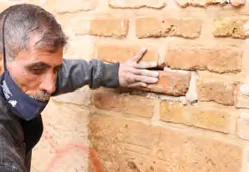
A Tarmeem craftsman inspecting a historic brick wall

Masonry

Stone conservation is the core of our field capability. Our teams execute cleaning, consolidation, repointing with compatible lime-based mortars, structural stabilisation, anastylosis and limited reconstruction. Work is preceded by an approved method statement and an on-site sample panel signed off before full execution.

Delivered 2,993 m² stone and repointing across 11 buildings at Ma’an; 1,500 m² stone façade restoration at Aqaba; consolidation and anastylosis at Qasr Al-Mshatta; stone seating and retaining walls at Beit Ras.
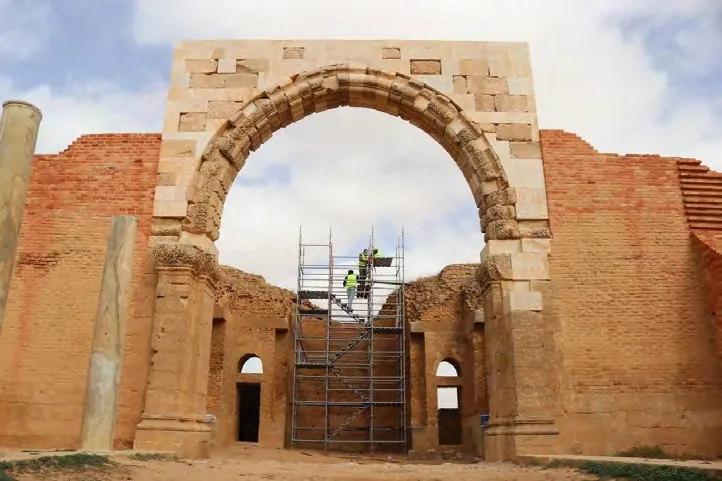
The stone arch and brick walls of Qasr Al-Mshatta during conservation

Mudbrick

Earthen architecture demands a distinct discipline. We remove surface crusts and crystallised salts using fine tools and controlled methods, treat biological growth, consolidate fragile fabric, and resolve the hydrological causes of decay rather than its symptoms — roof consolidation, drainage and foundation stabilisation.

Delivered At Qasr Al-Mshatta — the largest mudbrick structure and Umayyad palace in Jordan — including salt and crust removal, roof consolidation across the main halls, and foundation stabilisation.

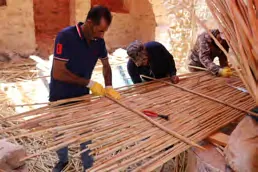
Craftsmen preparing a traditional timber-and-reed roof

Traditional Carpentry

We conserve historic timber in situ wherever possible: roof structures and tile-bearing frames, floors, doors and window reveals. Interventions cover cleaning, consolidation, treatment against biological attack, and the replacement of failed members with species-matched, seasoned timber worked by traditional joinery.

Delivered At the Ma’an Railway complex — roof timber and tile-bearing structures, timber treatment to floors and door reveals — and in the restoration of five heritage houses at Al Matan using local craftsmanship.

Our Methodology

Scientific method, international standards

Our work is grounded in scientific method and international standards for heritage preservation, consistent with UNESCO, ICOMOS and ICCROM guidance.

  1. State of Conservation

    Analysing building materials and techniques, identifying deterioration factors, and assessing existing conditions.

  2. Intervention Plan

    Outlining tools, materials and strategies for restoration, issued as a method statement and approved before works begin.

  3. Documentation

    Continuous photographic, sketch-based and written documentation throughout all project stages.

  4. Monitoring and Evaluation

    Regular assessment and final reporting, including recommendations for ongoing preservation.

Colour point cloud from a 3D laser scan of a heritage site 3D photogrammetric model of a heritage site
Advanced digital documentation: 3D laser scanning and photogrammetry

Every intervention is preceded by an approved method statement and an on-site sample panel, signed off by the supervising engineer before full execution. Materials and plant are submitted for approval before delivery to site, and signed photographic documentation is issued monthly.